Microblading & PMU Training in Michigan
Permanent makeup is one of the few beauty careers where one properly-learned skill supports $400-800 appointments, and one of the easiest to learn badly. We match aspiring artists with Michigan training programs taught inside working studios: small cohorts, real skin theory, and supervised live-model sessions, not a weekend certificate and good luck. Students travel from Ohio, Indiana, and Illinois for exactly this.
Typical Michigan pricing: $3500-$6500 for fundamentals; advanced courses vary
- Top-rated, licensed local artists
- Vetted on healed results & facility licensing
- Free, no-obligation consultations
Free Consultation, 60 Seconds
Tell us what you’re looking for and we’ll match you with a top-rated, licensed artist. Free, no obligation.
Why PMU training is worth doing right
The economics of permanent makeup are unusual for the beauty industry. A single skill (microblading, powder brows, or machine hairstrokes) supports appointments that bill $400-800, take two to three hours, and generate returning clients for annual refreshes. An artist with a modest book of two or three clients a week out-earns most salon chairs. That math is real, and it’s exactly why the training market attracted so many bad actors.
Walk through Instagram and you’ll find two-day “masterclass” certifications with forty students in a hotel conference room, no supervised needle time, a laminated certificate, and a hashtag. Those students go home, work on a friend, and discover that depth control, color theory, and skin behavior were never actually taught: they were mentioned. The gap between a certificate and a competent artist is measured in supervised hours on real skin, and that’s the one thing certificate mills structurally cannot provide.
What the programs we match students with do differently
Every program we recommend is taught inside a working Michigan studio by an artist who still takes clients. Cohorts are small (typically four to eight students) so the trainer watches every stroke. The curriculum covers skin anatomy and Fitzpatrick typing, color science and pigment chemistry, brow mapping, both hand-tool and machine work, and bloodborne pathogen certification. Then comes the part that separates real training from theater: supervised sessions on live models, arranged by the school, with the trainer beside you correcting depth and angle in real time.
This level of mentorship is genuinely rare between Chicago and Cleveland, which is why a meaningful share of every cohort drives in from Ohio, Indiana, and Illinois and books a hotel for the week. When the nearest comparable program is four hundred miles away, the travel is the cheap part of the decision.
What your appointment includes
- Small cohort (typically 4-8 students) taught by a working artist
- Full theory phase: skin anatomy, Fitzpatrick types, color science, pigment chemistry
- Brow mapping and design training with hand-tool and machine work
- Bloodborne pathogen certification (OSHA-aligned)
- Professional starter kit: machine or hand tools, pigments, practice supplies
- Supervised live-model sessions with models arranged by the school
- Post-course mentorship and portfolio review as you take first clients
Why find your training through Microblading Michigan?
We spend all day vetting Michigan PMU artists for consumers, which means we know exactly whose healed work holds up, and whose students’ work holds up, which is the real test of a trainer. The programs we match students with are run by artists we’d refer paying clients to, teach in licensed working studios, and show healed student results, not just classroom photos. The matching costs you nothing; you pay the school directly, same tuition as applying cold.
How it works
Inquiry & interview
You talk with the trainer (not a sales rep) about your goals, timeline, and whether PMU is actually the right career move. Good programs screen students; mills enroll anyone with a card number.
Theory & practice-skin phase
Skin anatomy, color theory, mapping, and depth control drilled on practice skins and latex until your strokes are consistent, before anyone lets you near a person.
Supervised live models
Real procedures on real people, with the trainer at your shoulder correcting hand angle, depth, and pigment work stroke by stroke. This is the phase certificate mills skip entirely.
Certification & launch support
Certificate, bloodborne pathogen credential, and the practical stuff: facility licensing guidance, pricing your first year, and portfolio-building strategy with mentorship as you book early clients.
Real pmu training results
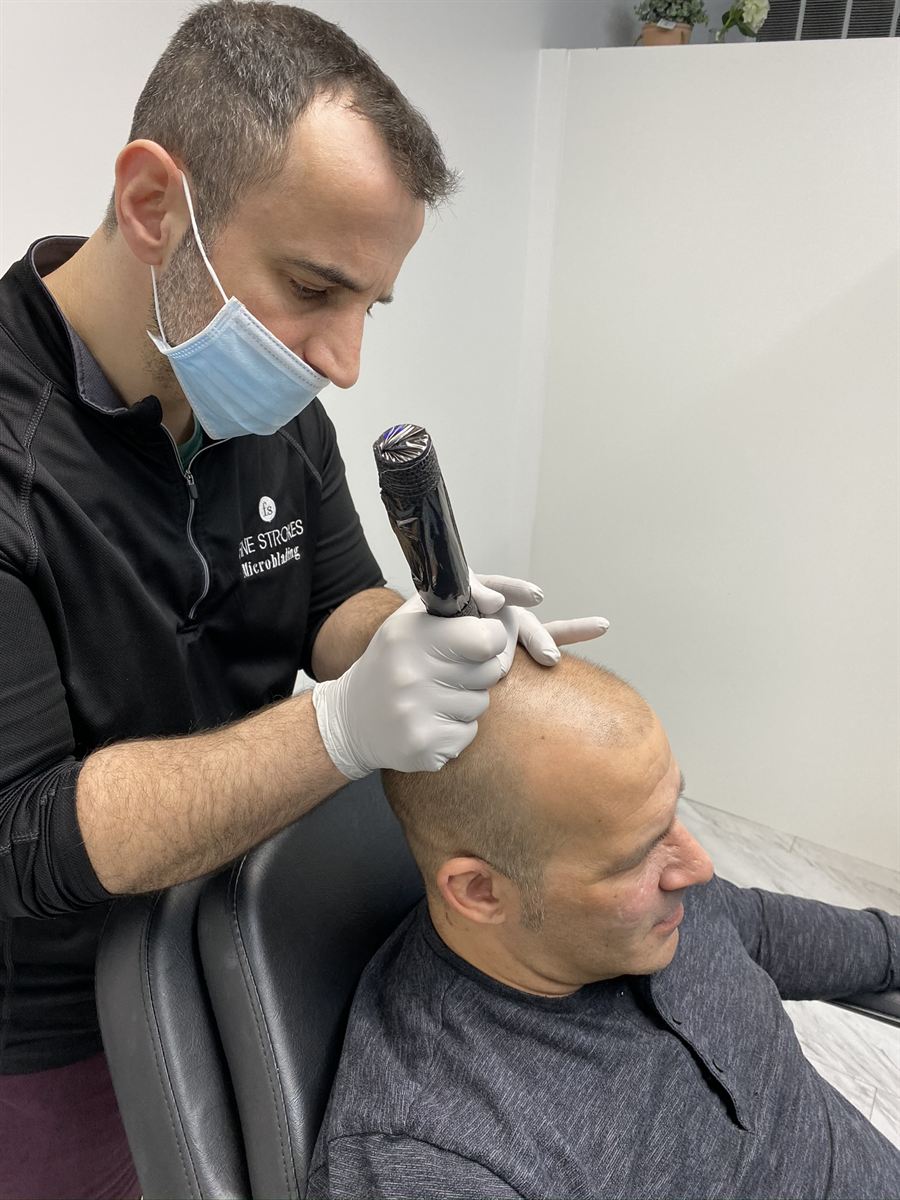
Client work from our featured studio. Follow @microblading_michigan for daily healed results.
Microblading & PMU Training guides
Everything you need to decide with confidence: honest answers, no sales pitch.
Microblading & PMU Training by city
We match pmu training clients with top-rated artists across Michigan and nearby states.
- PMU Training in Birmingham
- PMU Training in Troy
- PMU Training in Royal Oak
- PMU Training in Novi
- PMU Training in Rochester Hills
- PMU Training in West Bloomfield
- PMU Training in Ann Arbor
- PMU Training in Grand Rapids
- PMU Training in Kalamazoo
- PMU Training in Holland
- PMU Training in Traverse City
- PMU Training in Muskegon
- All locations →
Microblading & PMU Training: common questions
Do I need a cosmetology license to do microblading?
How much does legitimate PMU training cost in Michigan?
Can I train in Michigan and practice in Ohio, Indiana, or Illinois?
How long until I’m working on real clients?
How long is a fundamentals course?
I’m coming from out of state. Is the travel worth it?
Get matched with a pmu training artist
Get matched with a top-rated, licensed Michigan PMU artist. Free consultations, no obligation.